
- Cloud Architecture
- DevOps
- Infrastructure
- Enterprise Technology
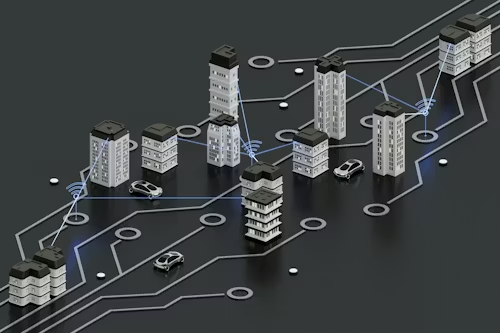
Cloud infrastructure is no longer a technical afterthought.
It is the foundation upon which modern businesses operate.
Organizations that treat cloud architecture as mere hosting miss its strategic value. The cloud determines how quickly teams innovate, how efficiently costs are managed, and how securely operations scale.
At Hubexia Solutions, we approach cloud architecture as an executive decision — not a backend configuration.
Infrastructure as Leverage
Infrastructure defines velocity.
When environments are manually configured, scaling requires human intervention. When infrastructure is codified, scaling becomes programmable.
Infrastructure-as-Code enables:
- Environment reproducibility
- Automated deployment pipelines
- Consistent security baselines
- Disaster recovery readiness
- Faster onboarding
Codified infrastructure reduces uncertainty. It transforms cloud environments into predictable systems rather than fragile configurations.
Cost Optimization Is Engineered
Many organizations discover that cloud bills escalate unexpectedly.
This is rarely a pricing issue. It is an architectural one.
Efficient cloud design includes auto-scaling policies, right-sized compute instances, serverless components where appropriate, reserved capacity planning, and continuous cost monitoring.
Cost governance should be embedded within architecture — not addressed after budgets are exceeded.
Cloud efficiency is intentional.
Security by Design, Not Reaction
Security posture is shaped by architecture.
Identity management, encryption standards, access policies, logging systems, and network segmentation determine risk exposure.
A secure system is not one with added monitoring tools. It is one designed with layered protection from the beginning.
We implement least-privilege access, environment isolation, audit logging, and compliance-aware architecture to ensure that growth does not compromise security.
DevOps as an Operational Philosophy
DevOps is often misunderstood as tooling.
It is a culture of automation, feedback loops, and shared ownership between development and operations.
When CI/CD pipelines are integrated with cloud infrastructure, releases become routine rather than risky. Observability ensures continuous performance insight. Teams operate with confidence.
Cloud architecture, when designed strategically, becomes a competitive advantage.
It allows organizations to scale calmly.
It turns infrastructure from overhead into leverage.